In This Guide
Quick Answer: A building condition assessment (BCA) evaluates every major system in a property — structure, envelope, mechanical, electrical, plumbing, and life safety — to identify current deficiencies, estimate repair costs, and forecast capital needs over 5-12 years. Most commercial transactions, refinancing events, and Florida milestone inspections require some form of BCA.
What Is a Building Condition Assessment?
A building condition assessment is a comprehensive, visual-based evaluation of a property's physical condition. Think of it as a complete health checkup for a building. Instead of checking blood pressure and cholesterol, the assessment examines the roof, walls, foundation, HVAC, electrical, plumbing, and fire safety systems.
The output is a detailed report that documents:
- Current condition of every major building system
- Immediate repair needs (safety concerns, code violations, active deterioration)
- Deferred maintenance items (items that should be addressed within 1-3 years)
- Capital reserve projections (major replacements expected over the next 5-12 years)
- Estimated costs for each identified item
Commercial BCAs typically follow ASTM E2018, the industry standard that defines scope, methodology, and reporting requirements. This standardization ensures consistency whether the assessment is for a 20-unit apartment building or a 500,000 SF office complex.
When Is a BCA Required?
Several scenarios trigger the need for a building condition assessment:
Commercial Real Estate Transactions
Buyers and lenders require BCAs as part of due diligence. The assessment helps quantify the true cost of ownership beyond the purchase price. A building listed at $5 million with $800,000 in deferred maintenance is effectively a $5.8 million investment. Learn more about our due diligence inspection services.
Loan Origination and Refinancing
Lenders use BCAs to evaluate collateral condition. If a building needs significant capital investment, that affects the loan-to-value ratio and risk profile. Most commercial mortgage-backed securities (CMBS) require a PCA as a condition of origination.
Florida Milestone Inspections (SB-4D)
Florida law requires milestone structural inspections for condominium and cooperative buildings three stories or taller. These inspections at 25 or 30 years (depending on coastal proximity) are essentially targeted BCAs focused on structural and life-safety systems.
Portfolio Management
Property management companies and REITs use periodic BCAs to prioritize capital expenditures across multiple properties. Rather than waiting for systems to fail, proactive assessments enable planned maintenance that costs less and causes fewer tenant disruptions.
Insurance Renewals
Insurers increasingly require building condition documentation as part of the underwriting process, particularly for older buildings or properties in high-risk zones. A thorough BCA can actually reduce premiums by demonstrating proactive maintenance.
What a BCA Report Includes
A comprehensive BCA evaluates eight major building systems:
| System | Key Inspection Points | Common Deficiencies |
|---|---|---|
| Structural | Foundation, load-bearing walls, columns, beams, floor systems | Settlement cracks, spalling concrete, corroded reinforcement |
| Building Envelope | Roof, exterior walls, windows, doors, waterproofing | Membrane deterioration, sealant failures, moisture intrusion |
| Mechanical/HVAC | Heating, cooling, ventilation, controls | Aging equipment, inadequate capacity, duct deterioration |
| Electrical | Panels, wiring, lighting, emergency power | Overloaded circuits, outdated panels, grounding issues |
| Plumbing | Supply lines, drainage, fixtures, water heating | Corroded piping, inadequate pressure, code violations |
| Fire/Life Safety | Alarms, sprinklers, extinguishers, egress | Non-functional equipment, blocked exits, expired certifications |
| Interior Finishes | Floors, walls, ceilings, common areas | Water damage, ADA non-compliance, wear patterns |
| Site/Exterior | Parking, drainage, landscaping, fencing | Pavement deterioration, grading issues, trip hazards |
Each deficiency is documented with photographs, severity ratings (typically Good/Fair/Poor), remaining useful life estimates, and repair cost projections. The report concludes with an executive summary and a capital reserve schedule.
BCA vs. Property Condition Assessment
The terms are largely interchangeable. "Property Condition Assessment" (PCA) is the more common industry term following the ASTM E2018 standard, while "Building Condition Assessment" (BCA) is often used in government, institutional, and Florida regulatory contexts. The methodology and deliverables are essentially identical.
One distinction: a Facility Condition Assessment (FCA) is a broader evaluation often used for institutional portfolios (schools, hospitals, government buildings). FCAs typically include a Facility Condition Index (FCI) — the ratio of deferred maintenance cost to replacement value — which enables comparison across multiple buildings.
How Drones Improve BCAs
Traditional BCAs have a significant limitation: the most critical building systems — roofs and facades — are the hardest to inspect visually from ground level. Assessors either use binoculars (limited detail), scaffolding (expensive and slow), or rope access (still limited coverage).
Drone-enhanced BCAs solve this problem:
- Complete roof documentation — Every square foot captured in high-resolution imagery, not just accessible areas
- Facade scanning — All four elevations documented from multiple angles without scaffolding
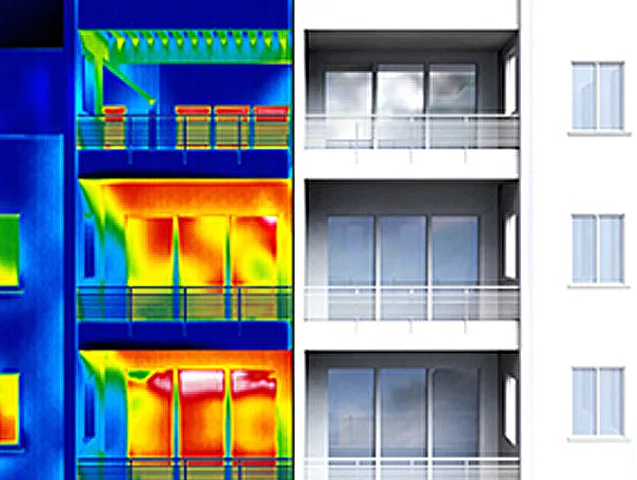
- Thermal imaging — Infrared cameras detect hidden moisture, insulation failures, and active leaks invisible to the naked eye
- AI defect detection — Machine learning algorithms analyze thousands of images to identify cracks, spalling, membrane damage, and other defects that manual review might miss
- Measurable data — Drone imagery enables precise area measurements of damaged zones, not estimates
The result is a more thorough assessment delivered in less time. What might take three days with scaffolding can be completed in a single day with drones. For property portfolios, this translates to significant cost savings across multiple buildings.
For large commercial properties in Miami, Fort Lauderdale, or anywhere in Florida, our drone-enhanced BCAs deliver the comprehensive data that lenders, buyers, and regulators require. Request a quote.
Choosing a BCA Provider
When selecting a BCA provider, evaluate these criteria:
- Professional credentials — Look for PE (Professional Engineer) oversight on the report. PE-stamped reports carry legal weight that general inspection reports do not.
- Technology capabilities — Providers using drone and thermal technology deliver more comprehensive data than visual-only assessments.
- ASTM E2018 compliance — Ensure the methodology follows the industry standard, particularly for transaction-related assessments.
- Turnaround time — Most commercial transactions have tight due diligence windows. Confirm the provider can meet your timeline.
- Insurance and FAA compliance — Drone operators must hold FAA Part 107 certification and adequate liability insurance ($5M+ recommended for commercial properties).
A thorough BCA protects your investment. It transforms unknowns into quantified, budgetable line items — and that clarity is worth far more than the cost of the assessment itself.
Need a Building Inspection?
Get a free consultation and custom quote — 1-hour average response time. PE-certified reports. significantly less than scaffolding.
Frequently Asked Questions
What is a building condition assessment?
A building condition assessment (BCA) is a systematic evaluation of a property's physical systems — structure, envelope, mechanical, electrical, plumbing, and life safety — to identify deficiencies, estimate repair costs, and forecast capital needs over a 5-12 year period.
When is a building condition assessment required?
BCAs are commonly required during commercial real estate transactions, refinancing, insurance renewals, portfolio due diligence, and government compliance milestones such as Florida's SB-4D milestone inspections for condominiums and cooperative buildings.
How much does a building condition assessment cost?
Costs vary by building size and complexity. Typical commercial BCAs range from $3,000-$8,000 for mid-size buildings and $10,000-$25,000+ for large or complex properties. Drone-enhanced BCAs can reduce costs by eliminating scaffolding and rope access fees.
What is the ASTM E2018 standard?
ASTM E2018 is the Standard Guide for Property Condition Assessments used in commercial real estate. It defines the scope, methodology, and reporting requirements for PCAs including walk-through observations, document review, stakeholder interviews, and opinion of probable costs.
How do drones improve building condition assessments?
Drones capture high-resolution imagery of roofs, facades, and elevated areas that are difficult to access manually. Thermal cameras detect hidden moisture and insulation failures. AI analysis can identify defects across thousands of images, producing more comprehensive assessments in less time.