In This Guide
Quick Answer: A commercial building inspection should systematically evaluate 8 major systems: structural, building envelope, mechanical/HVAC, electrical, plumbing, fire/life safety, interior finishes, and site/exterior. Using a standardized checklist ensures nothing is missed and creates documentation for insurance, compliance, and capital planning.
Why You Need a Systematic Checklist
Most building problems do not announce themselves. A leaking pipe is obvious. The corroding reinforcement inside a parking garage column is not — until concrete starts falling. By the time symptoms become visible to occupants, the underlying problem has often been worsening for months or years.
A systematic inspection checklist serves three purposes:
- Early detection — Catching problems at stage 1 (minor, inexpensive to fix) instead of stage 5 (major, expensive, potentially dangerous)
- Consistent documentation — Creating a trackable record of building condition over time, which is invaluable for insurance, compliance, and resale
- Capital planning — Identifying what needs attention now versus what can be budgeted for next quarter or next year
The checklist below follows the ASTM E2018 framework adapted for practical use by property managers and building owners.
1. Structural Systems
The structural system is the skeleton of the building. Deficiencies here are the most serious and most expensive to address.
Inspect:
- Foundation — visible settlement, cracks wider than 1/8 inch, water intrusion, exposed surfaces
- Load-bearing walls — cracking patterns, plumb alignment, mortar condition (masonry)
- Columns and beams — concrete spalling, exposed reinforcement, rust staining, deflection
- Floor systems — cracking, uneven surfaces, vibration under load
- Parking structures — slab condition, expansion joints, drainage, traffic-bearing membrane, column bases
Red flags requiring immediate professional evaluation:
- Any crack wider than 1/4 inch in a structural element
- Exposed reinforcing steel in any concrete member
- Visible deflection (sagging) of beams or slabs
- Active water flow through structural cracks
2. Building Envelope
The envelope protects everything inside. Failures here lead to cascade damage across multiple systems. See our detailed building envelope inspection guide for comprehensive coverage.
Inspect:
- Roof — membrane or covering condition, flashing, drainage, penetration seals, ponding, equipment screens
- Exterior walls — cladding condition, sealant joints, crack patterns, staining, attachment integrity
- Windows and doors — seal condition, glazing integrity, frame corrosion, hardware operation
- Waterproofing — below-grade membranes, plaza decks, planter waterproofing
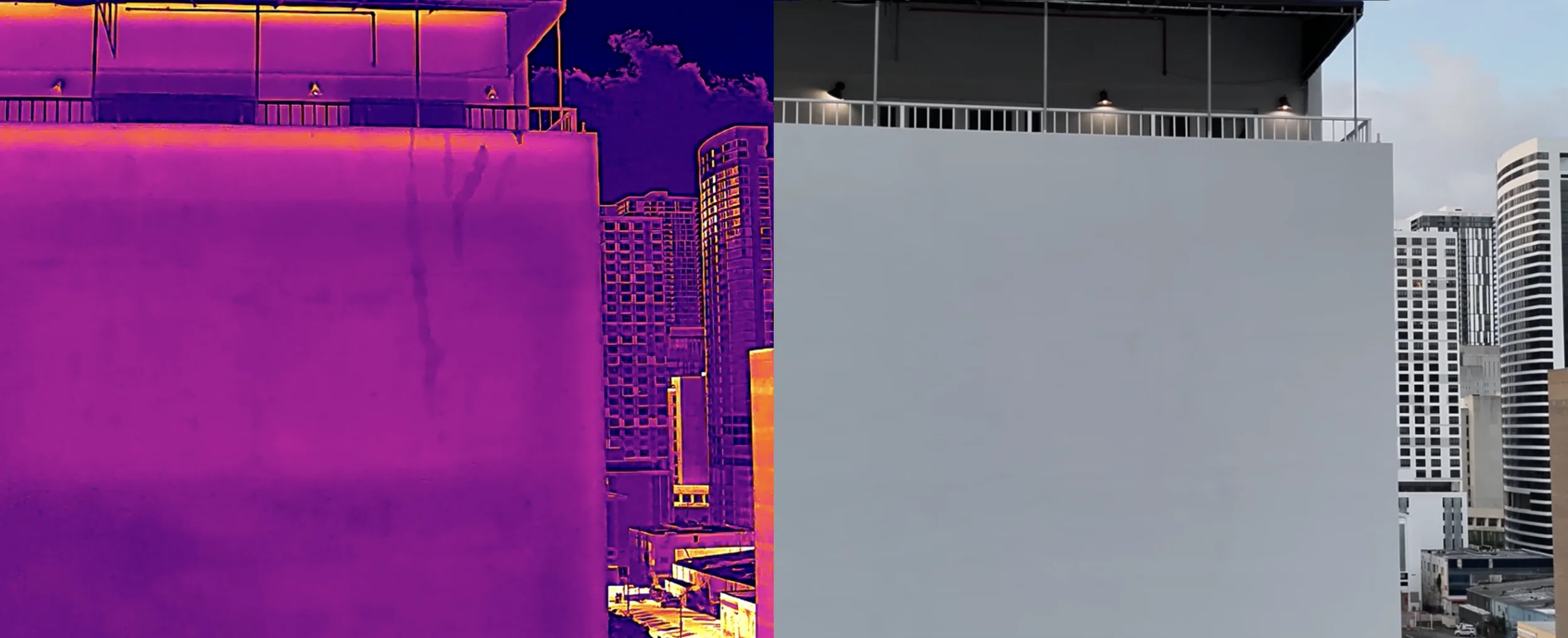
Drone advantage: Upper facade areas (above the 4th floor) and full roof surfaces are effectively invisible from ground level. Drone facade inspection and drone roof inspection document these areas comprehensively without scaffolding costs.
3. Mechanical/HVAC Systems
HVAC typically represents the largest capital replacement item in commercial buildings. Proactive maintenance extends equipment life and reduces energy costs.
Inspect:
- Heating plant — boiler condition, controls, distribution piping, insulation
- Cooling plant — chiller performance, condenser condition, refrigerant levels
- Air handling — unit condition, filter cleanliness, belt/bearing wear, coil condition
- Ductwork — joint integrity, insulation condition, damper operation
- Controls — thermostat accuracy, BMS (building management system) operation, scheduling
- Ventilation — outdoor air rates, exhaust fans, garage ventilation
Key metrics to track: Equipment age versus expected useful life, energy consumption trends (kWh per square foot), and tenant comfort complaints. Equipment approaching end-of-life should be budgeted for replacement.
4. Electrical Systems
Inspect:
- Main switchgear — condition, capacity relative to current load, breaker operation
- Distribution panels — labeling, breaker condition, signs of overheating (discoloration)
- Wiring — visible condition where accessible, grounding integrity
- Emergency power — generator operation (load test), transfer switch function, fuel supply
- Lighting — fixture condition, control operation, emergency lighting (battery test)
- Exterior — parking lot lighting, building-mounted fixtures, landscape lighting
Key concern for older buildings: Electrical panels installed before current codes may lack capacity for modern loads, particularly where tenant improvements have added HVAC, computing, or EV charging infrastructure without panel upgrades.
5. Plumbing Systems
Inspect:
- Supply piping — material type, visible corrosion, water pressure at fixtures
- Drain/waste/vent — flow rates, backups, odors, cleanout access
- Water heating — equipment condition, capacity, temperature settings, safety valves
- Fixtures — condition, ADA compliance, water efficiency
- Backflow prevention — testing current, devices present per code
- Fire suppression supply — incoming pressure, PIV condition, FDC accessibility
Hidden risk: Cast iron drain lines in buildings over 40 years old are often deteriorated internally even when exterior condition appears acceptable. Interior camera inspection of drain lines is recommended for buildings of this age.
6. Fire and Life Safety
Inspect:
- Fire alarm system — panel condition, detector test dates, notification devices, monitoring status
- Sprinkler system — head condition, valve positions, inspection tags current, FDC accessible
- Fire extinguishers — current inspection tags, correct type for location, accessible
- Emergency lighting — battery test (30 seconds on, lights stay lit), exit signs illuminated
- Egress — all exit paths clear of obstruction, exit doors operable and not blocked, stairwell pressurization functional
- Fire doors — self-closing hardware functional, no propping, no gaps
Compliance note: Fire alarm and sprinkler systems require annual inspection by licensed fire protection companies. Keep all certificates current — insurance companies verify these during underwriting.
7. Interior Finishes and ADA Compliance
Inspect:
- Common area finishes — floor, wall, and ceiling condition in lobbies, corridors, restrooms
- Moisture indicators — ceiling stains, wall discoloration, musty odors, bubbling paint
- ADA accessibility — entrance ramps, door widths, restroom configurations, signage, elevator compliance
- Elevators — current inspection certificate, cab condition, door operation, ride quality
ADA note: The ADA does not grandfather existing buildings. Any renovation exceeding a cost threshold triggers path-of-travel accessibility upgrades. An ADA survey prior to renovation avoids unexpected scope additions.
8. Site and Exterior
Inspect:
- Pavement — cracking, settling, drainage, striping condition
- Sidewalks — trip hazards (any displacement over 1/4 inch), drainage, ADA compliance
- Landscaping — overgrowth against building (creates moisture trap), tree health, irrigation function
- Drainage — grading direction (should slope away from building), catch basin condition, retention pond function
- Fencing and gates — condition, security function, vehicle gate operation
- Signage — condition, illumination, code compliance
Recommended Inspection Schedule
| System | Frequency | By Whom |
|---|---|---|
| Structural walkthrough | Quarterly | Facility staff |
| Structural (comprehensive) | Per SB-4D schedule / 5 years | Licensed PE |
| Building envelope (visual) | Annually | Facility staff |
| Building envelope (drone + thermal) | Every 2-3 years | Drone inspection provider |
| HVAC | Quarterly (filters monthly) | Mechanical contractor |
| Electrical | Annually | Licensed electrician |
| Plumbing | Annually | Licensed plumber |
| Fire/life safety | Annually (quarterly for extinguishers) | Licensed fire protection |
| ADA compliance | Every 3 years / before renovation | ADA specialist |
| Site/exterior | Quarterly | Facility staff |
A systematic approach to building inspection transforms maintenance from reactive (responding to failures) to proactive (preventing them). The result is lower total cost, fewer tenant disruptions, better insurance terms, and a building that holds its value over time.
For the components that are hardest to inspect — roofs and facades — drone-based preventative maintenance inspection fills the gap that ground-level walkthroughs cannot cover. Contact us to discuss an inspection program for your property or portfolio.
Need a Building Inspection?
Get a free consultation and custom quote — 1-hour average response time. PE-certified reports. significantly less than scaffolding.
Frequently Asked Questions
How often should commercial buildings be inspected?
At minimum, conduct a walkthrough of major systems quarterly and a comprehensive inspection annually. HVAC, fire safety, and elevator systems require their own maintenance schedules dictated by manufacturer specifications, local codes, and insurance requirements. In Florida, structural inspections follow SB-4D milestone schedules.
Who should perform commercial building inspections?
Routine walkthroughs can be performed by trained facility staff using a standardized checklist. Annual comprehensive inspections should involve licensed professionals: structural engineers for building integrity, mechanical engineers for HVAC, licensed electricians for electrical systems, and certified fire protection specialists for life safety. Drone inspections require FAA Part 107 certified operators.
What standard governs commercial building inspections?
ASTM E2018 (Standard Guide for Property Condition Assessments) is the industry standard for commercial property inspections, particularly for transaction-related assessments. Local building codes, NFPA standards for fire safety, and jurisdiction-specific requirements (like Florida SB-4D) provide additional frameworks.
What is the most commonly overlooked area in building inspections?
The building envelope — particularly upper facade areas, parapet caps, and roof details — is the most commonly overlooked because it is the hardest to access. Ground-level visual inspections miss deterioration on upper floors entirely. This is where drone inspection provides the most value, documenting areas that would otherwise require expensive scaffolding to evaluate.
How can drones help with commercial building inspections?
Drones provide safe, rapid access to roofs and facades without scaffolding. They capture high-resolution imagery for condition documentation, thermal data for energy and moisture analysis, and 3D models for measurement and planning. For portfolio managers inspecting multiple buildings, drones dramatically reduce per-building inspection time and cost.