Key Fact: Parking garages deteriorate 2-3x faster than typical buildings because they are exposed to vehicle chemicals, road salts, temperature extremes, and heavy dynamic loading. A $5,000 annual inspection program can prevent $500,000+ in emergency structural repairs.
Why Parking Garages Fail Faster Than Other Structures
Parking garages are among the most vulnerable building types because they combine four aggressive deterioration factors that most buildings do not face simultaneously:
- Chloride exposure — Vehicles carry road salts, de-icing chemicals, and coastal salt spray directly onto concrete surfaces. These chlorides penetrate the concrete cover and initiate rebar corrosion, the primary cause of concrete spalling
- Open exposure — Unlike enclosed buildings, most garage levels are open to rain, wind, temperature swings, and UV radiation
- Dynamic loading — Repeated vehicle loading creates fatigue stress in slabs and beams that accelerates cracking
- Drainage challenges — Flat deck surfaces are prone to ponding water, which accelerates chloride penetration and freeze-thaw damage
The result: untreated parking garages can reach a state of critical structural deficiency within 25-30 years — sometimes sooner in coastal Florida environments where salt air compounds the chloride problem.
Warning Signs of Structural Deterioration
| Sign | What It Indicates | Severity |
|---|---|---|
| Rust staining on concrete | Rebar corrosion has begun | Moderate — investigate promptly |
| Spalling or delamination | Corrosion has expanded and cracked the concrete | High — structural repair needed |
| White deposits (efflorescence) | Water is migrating through concrete and dissolving salts | Low-Moderate — waterproofing issue |
| Cracking (hairline to wide) | Structural stress, shrinkage, or settlement | Varies — width and pattern determine severity |
| Ponding water on deck | Drainage failure, slope issues | Moderate — accelerates all other problems |
| Exposed rebar | Advanced spalling with active corrosion | Critical — immediate action required |
| Expansion joint failure | Joint sealant has deteriorated | Moderate — water enters structure below |
Types of Parking Garage Inspections
Visual Walkthrough
A basic visual inspection identifies surface-level damage: cracking patterns, spalling areas, rust staining, efflorescence, drainage problems, and joint condition. This is typically done annually.
Hands-On / Sounding Survey
Inspectors use chain drag or hammer sounding to detect subsurface delamination — areas where concrete has separated from the rebar but has not yet visibly spalled. This reveals problems before concrete falls onto vehicles below.
Drone + AI Assessment
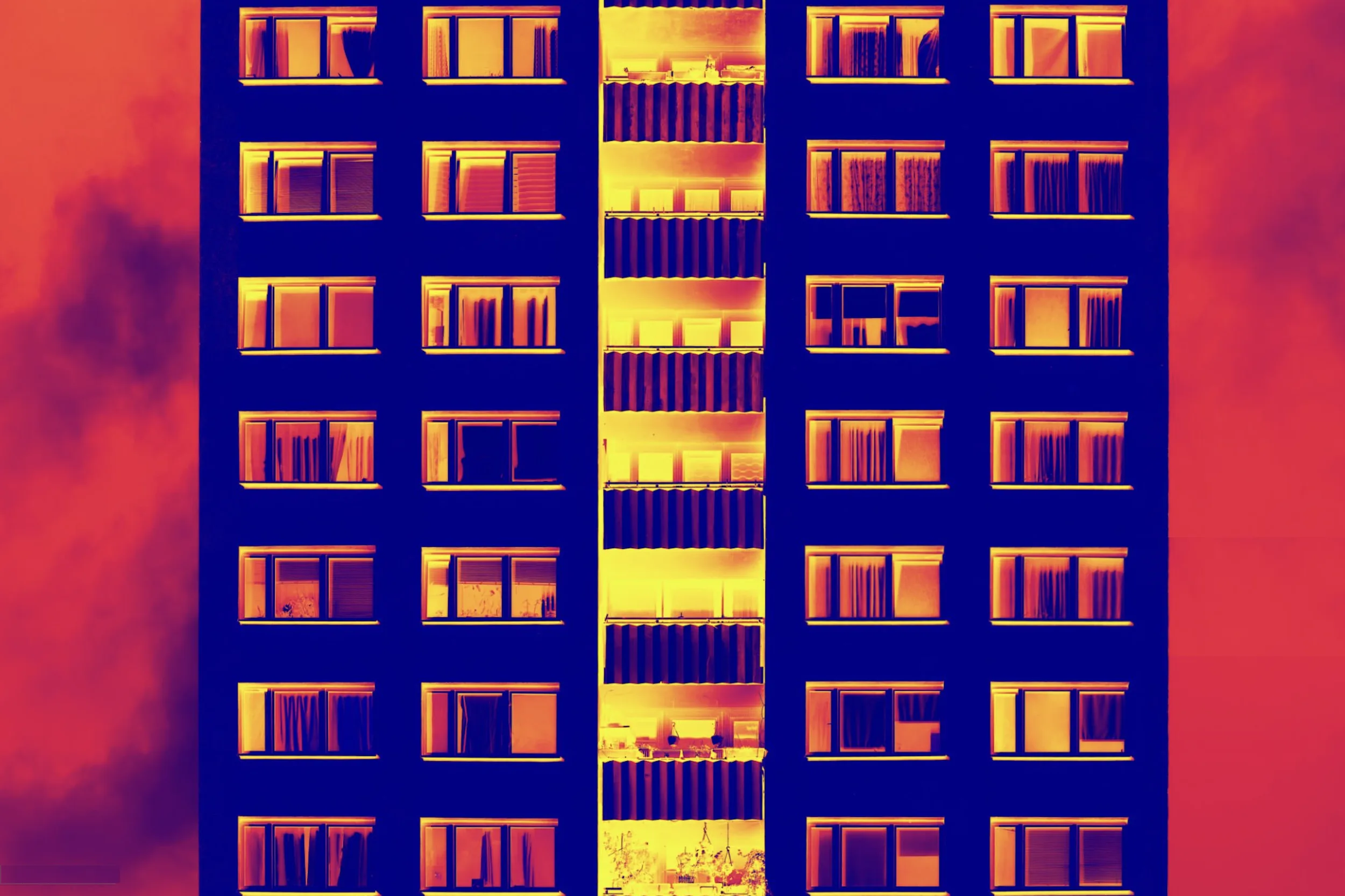
Drone inspection captures the entire structure — exterior facades, underside of elevated decks, top-deck surfaces, and column conditions. AI defect detection classifies every crack, stain, and spall with GPS coordinates and severity ratings. Thermal imaging reveals trapped moisture beneath waterproofing membranes.
Core Sampling and Lab Testing
For comprehensive evaluations, engineers extract concrete cores to test compressive strength, chloride content at various depths, carbonation depth, and petrographic analysis. This data predicts the remaining service life of the structure.
How Often Should You Inspect?
| Garage Age | Environment | Recommended Frequency |
|---|---|---|
| 0-10 years | Any | Visual every 2 years |
| 10-20 years | Inland | Visual annually + sounding every 3 years |
| 10-20 years | Coastal / salt exposure | Visual annually + sounding every 2 years |
| 20-30 years | Any | Comprehensive (visual + sounding + cores) every 2-3 years |
| 30+ years | Any | Annual comprehensive + drone monitoring |
Inspection Costs vs Repair Costs
| Activity | Estimated Cost | ROI |
|---|---|---|
| Annual visual inspection | $3,000 - $5,000 | Catches problems early |
| Comprehensive assessment (sounding + cores) | $8,000 - $15,000 | Predicts remaining life |
| Drone + AI + thermal inspection | $5,000 - $12,000 | 100% coverage, defect tracking |
| Waterproofing membrane replacement | $15 - $30 per sq ft | Extends life 10-15 years |
| Structural concrete repair | $50 - $200 per sq ft | Addresses active deterioration |
| Full deck replacement | $150 - $400+ per sq ft | Last resort — could have been prevented |
The math is clear: a $5,000 annual inspection that catches a waterproofing failure early costs less than 1% of the $500,000+ structural repair bill that results from 5-10 years of unchecked deterioration.
How Drone Inspections Improve Coverage
Parking garages present unique inspection challenges that drones are well-suited to address:
- Underside of elevated slabs — the most critical area for delamination and spalling detection, traditionally requiring expensive lift equipment
- Top deck surface — drone-mounted cameras create orthomosaic maps showing every crack, joint failure, and ponding area
- Exterior facades — column bases, beam connections, and expansion joints on exterior faces
- Year-over-year comparison — GPS-referenced imagery enables automated change detection between annual surveys, revealing deterioration rates
Preventative Maintenance Checklist
- Seal cracks — Inject epoxy or urethane into structural cracks to prevent water and chloride penetration
- Maintain waterproofing — Reapply traffic-bearing membrane coatings on schedule (every 5-7 years for elastomeric systems)
- Replace joint sealants — Expansion joints typically need replacement every 7-10 years
- Clear drains — Clogged drains cause ponding, which accelerates all forms of deterioration
- Apply penetrating sealers — Silane/siloxane sealers on exposed concrete slow chloride ingress
- Monitor and repair — Use annual drone inspections to track conditions and schedule repairs before problems escalate
Managing a parking structure? Get a free inspection quote from AERIALLY.AI — drone and AI-powered assessments that catch problems before concrete starts falling.
Need a Building Inspection?
Get a free consultation and custom quote — 1-hour average response time. PE-certified reports. significantly less than scaffolding.
Frequently Asked Questions
How often should a parking garage be inspected?
Most engineering standards recommend a visual inspection every 1-2 years and a comprehensive structural evaluation every 3-5 years. In coastal environments or freeze-thaw climates, annual inspections are recommended. Florida buildings 3+ stories require milestone inspections at 25-30 years.
What are the most common problems in parking garages?
The most common issues are concrete spalling (surface delamination), rebar corrosion from chloride penetration (road salts or coastal air), waterproofing membrane failure, expansion joint deterioration, cracking from structural movement, and drainage problems that allow water ponding.
How much does a parking garage inspection cost?
Basic visual inspections cost $3,000-$8,000 depending on the number of levels and total square footage. Comprehensive assessments with core sampling, chloride testing, and drone scanning range from $8,000-$25,000. These costs are minor compared to the $50-$400+ per square foot cost of structural repairs.
Can drones inspect parking garages?
Yes. Drones are highly effective for inspecting parking garage exteriors, top decks, and structural undersides of elevated slabs. Combined with AI defect detection, drones identify spalling, cracking, efflorescence, and staining patterns that indicate subsurface corrosion. Thermal imaging detects trapped moisture in the deck membrane.
What causes parking garage concrete to deteriorate?
The primary cause is chloride-induced rebar corrosion. Vehicles track road salts, de-icing chemicals, and coastal salt spray onto the deck surface. These chlorides penetrate the concrete, reach the reinforcing steel, and initiate corrosion. The expanding rust products crack and spall the surrounding concrete.