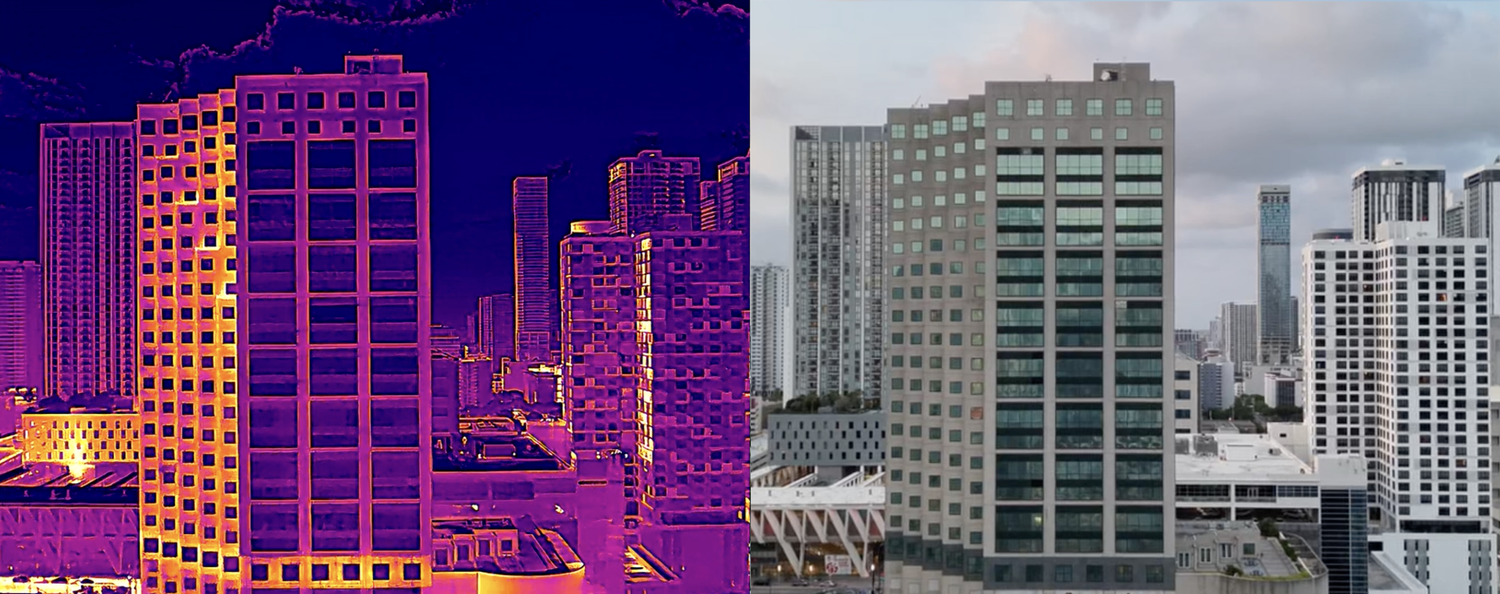
Key Takeaway: What you cannot see is what costs you. Thermal drone inspections detect moisture intrusion, insulation breakdown, roof leaks, and hidden defects invisible to the naked eye — often preventing six- or seven-figure repairs in Florida's harsh climate.
What Is a Thermal Drone Inspection?
A Thermal Drone Inspection uses infrared sensors mounted on drones to detect temperature differences across a building's surface. These differences often signal underlying issues like:
- Trapped moisture in roofs or facades
- Water leaks behind walls
- Missing or damaged insulation
- HVAC inefficiencies
- Compromised electrical or solar systems
- Areas prone to mold growth or structural decay
These issues may not be visible to the naked eye — but show up clearly in the thermal signature of the surface.
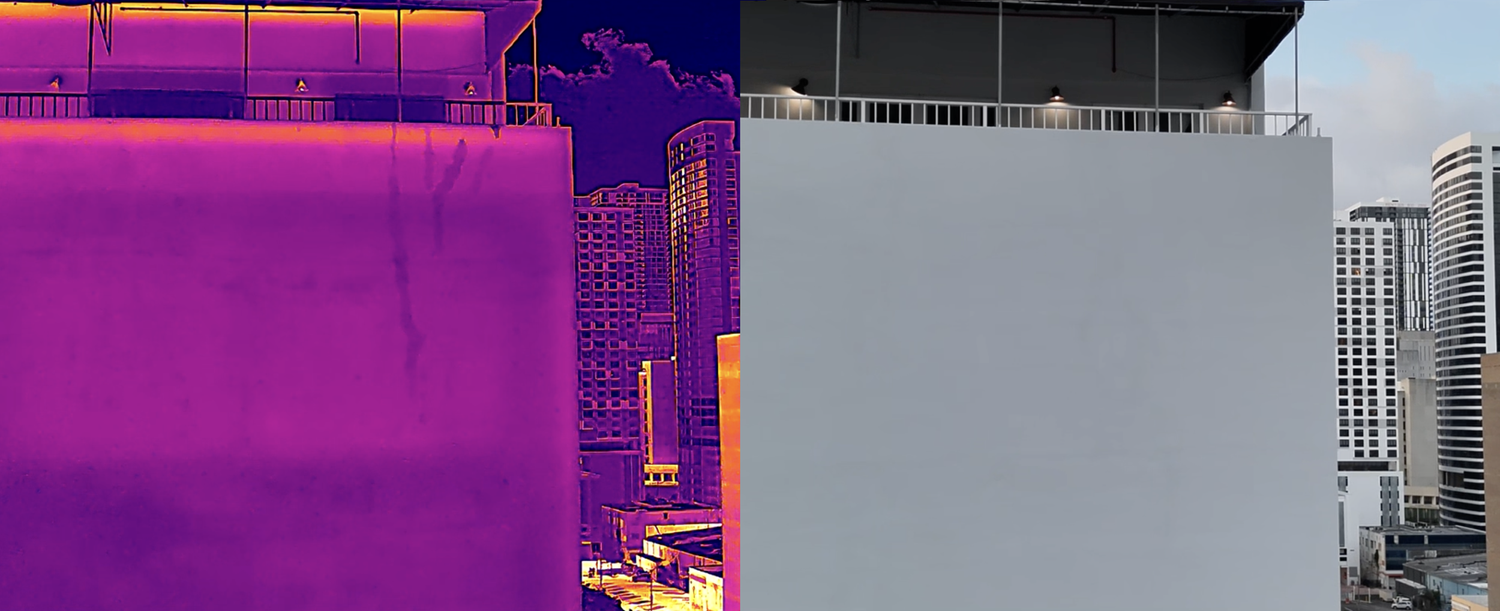
Why It Matters in Florida
Thermal drone inspections are especially critical in Florida due to:
Constant humidity: Moisture intrusion is common and destructive — especially after heavy storms.
Flat roofs and concrete facades: These hold heat and trap water, creating long-term risks.
High-rise exposure: Traditional inspections often cannot access upper floors and roofing safely or fully.
Insurance disputes: Detecting and proving hidden damage can mean the difference between a denied claim and a full payout.
Florida Climate Challenges for Buildings
Florida's climate creates a uniquely aggressive environment for building envelopes. Understanding these challenges explains why thermal inspection is not optional for Florida buildings — it is essential.
| Climate Factor | Impact on Buildings | What Thermal Reveals |
|---|---|---|
| High humidity (70-90% avg) | Constant moisture pressure on envelope, condensation in wall cavities | Cold spots from condensation, moisture-laden wall sections |
| Hurricane-force rain | Wind-driven water penetrates joints, cracks, and compromised sealants | Post-storm moisture trapped behind intact surfaces |
| Salt air (coastal) | Accelerates corrosion, degrades sealants and coatings faster | Thermal patterns from corroded rebar, efflorescence moisture paths |
| Intense UV / heat | Degrades roof membranes, sealants, coatings; thermal cycling stress | Membrane failures, insulation compression zones |
| Heavy rainfall (60+ inches/yr) | Overwhelms drainage, saturates building materials | Saturated roof insulation, wall moisture migration |
The Cost of Undetected Thermal Issues
Every thermal problem left undetected becomes exponentially more expensive over time:
- Saturated roof insulation — Costs $5,000-$15,000 to replace a section when caught by thermal scan. Left undetected, water reaches the deck, causing $50,000-$150,000 in structural repair plus full roof replacement.
- Hidden wall moisture — A $500 sealant repair caught by thermal scan prevents $10,000-$100,000 in mold remediation and interior finish damage.
- Insulation voids — Missing insulation detected by thermal costs $2,000-$5,000 to fill. The ongoing energy waste from undetected voids costs $3,000-$8,000 per year in excess HVAC bills for a commercial building.
- Subsurface delamination — Thermal detects the temperature differential from voids behind stucco or tile. A $2,000 localized repair prevents $50,000+ in facade panel failure.
How AERIALLY.AI Delivers Smarter Inspections
We combine thermal data with visual drone imagery and run it through our AI-powered defect detection system to deliver clear, actionable insights:
- High-resolution thermal maps of your facade and roof
- AI-tagged anomalies, including heat loss, moisture pockets, and insulation gaps
- 3D building models with overlayed thermal data
- PDF and Excel reports for engineers, adjusters, or contractors
- Time-stamped visual + thermal comparison sets for before/after analysis
Everything we deliver is structured to help you act fast, budget accurately, and avoid long-term liabilities.
When Should You Use Thermal Drone Inspections?
After Heavy Rain or Hurricanes
Moisture trapped in roofing membranes, facade joints, or parapets can go undetected for months. A thermal scan right after a storm helps you catch water damage early — before mold or structural failure sets in.
During Roof Leak Investigations
Thermal imaging can pinpoint the source of a leak by identifying temperature anomalies — without needing to cut open ceilings or climb into unsafe areas.
Before Major Repairs or Restoration
Get a thermal scan to detect hidden weaknesses before investing in painting, recoating, or waterproofing. You will avoid wasting money on surface work while hidden damage remains.
As Part of a Preventative Maintenance Plan
Schedule annual or semi-annual thermal inspections to monitor your building's thermal health over time and catch issues long before they escalate. Learn about our Preventative Maintenance Program.
What Sets AERIALLY.AI Apart
- Dual Imaging Flights: We fly both visual and thermal in one session — no need to schedule twice.
- FAA-Certified Teams: All missions flown by experienced, licensed pilots.
- AI-Driven Defect Detection: We do not just show heat maps — we interpret them, label them, and deliver structured data.
- Actionable Reports: Our deliverables plug directly into engineering assessments, insurance claims, and restoration scopes.
Do not wait for water stains, tenant complaints, or structural failures to tell you something is wrong. With AERIALLY.AI, you will know what is really going on — before it is too late. Get a free inspection quote.
Need a Building Inspection?
Get a free consultation and custom quote — 1-hour average response time. PE-certified reports. significantly less than scaffolding.
Frequently Asked Questions
What is a thermal drone inspection?
A thermal drone inspection uses infrared sensors mounted on drones to detect temperature differences across a building's surface. These differences signal underlying issues like trapped moisture in roofs or facades, water leaks behind walls, missing or damaged insulation, HVAC inefficiencies, and areas prone to mold growth.
Why are thermal inspections especially important in Florida?
Florida's constant humidity makes moisture intrusion common and destructive. Flat roofs and concrete facades hold heat and trap water. High-rise exposure limits traditional access. And detecting hidden damage is critical for insurance claims — the difference between a denied claim and a full payout.
When should I schedule a thermal drone inspection?
Schedule thermal inspections after heavy rain or hurricanes (to catch trapped moisture), during roof leak investigations, before major repairs or restoration (to find hidden weaknesses), and as part of an annual or semi-annual preventative maintenance plan.
What does AERIALLY.AI deliver from a thermal inspection?
We deliver high-resolution thermal maps, AI-tagged anomalies (heat loss, moisture pockets, insulation gaps), 3D building models with overlayed thermal data, PDF and Excel reports for engineers and adjusters, and time-stamped visual plus thermal comparison sets for before/after analysis.